How We Get Stripes That Actually Last All Week
Crisp diagonal mowing stripes are not magic — they are blade height, roller weight, and a pattern that changes every single visit.
The short answer
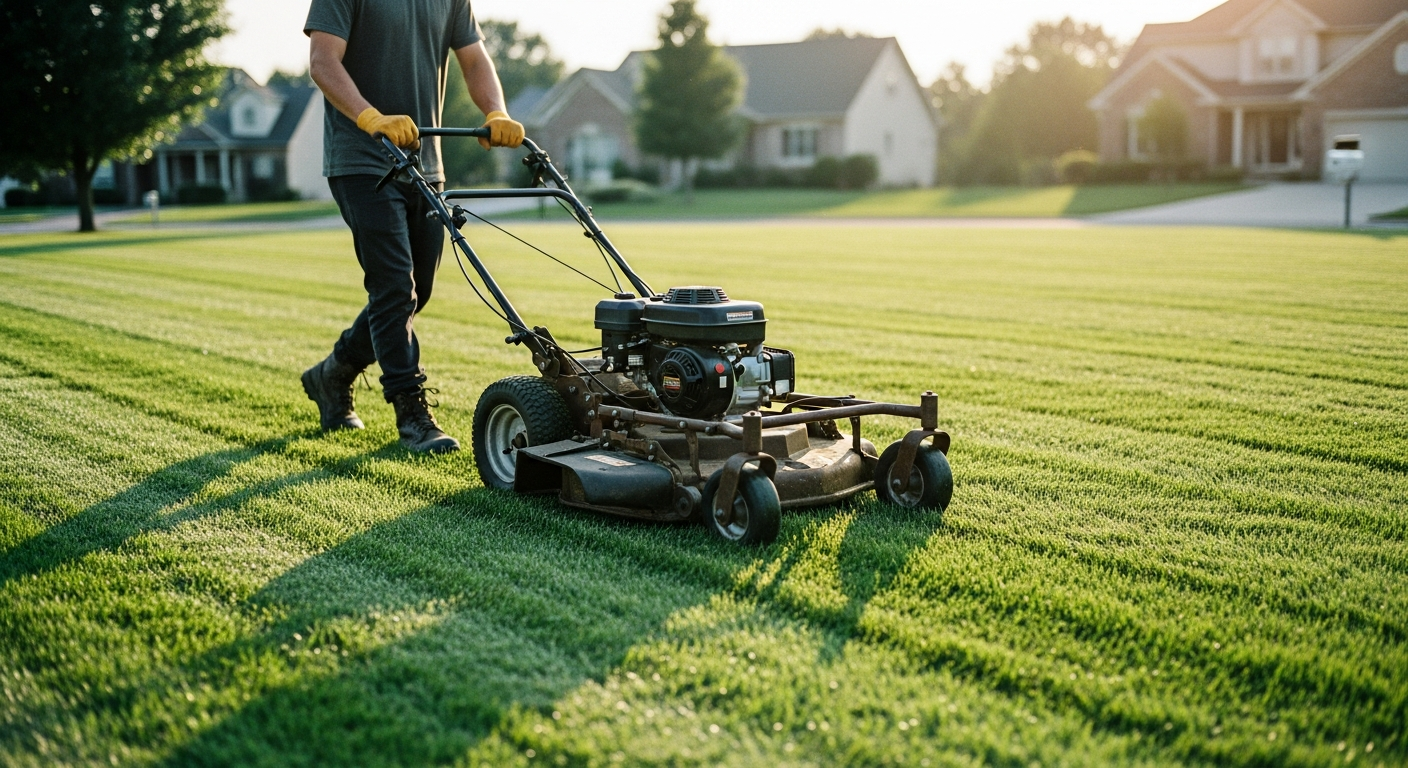
Mowing stripes come from grass blades bent in opposite directions, not cut differently. Long-lasting stripes need three things: a blade height of 3 to 3.5 inches, a 25–35 lb striping roller behind the deck, and a different pattern every single visit. Without the roller, stripes fade by the third day; without rotating the pattern, the lawn lays permanently within a season.
Key stats
- Cool-season grasses cut at 3 inches or higher reflect light at roughly twice the contrast ratio of the same lawn cut at 2 inches.Source: University of Tennessee Turfgrass Science
- Same-direction mowing every week causes wheel-track soil compaction up to 18% higher than rotating patterns.Source: Penn State Extension
- A dull mower blade increases turfgrass disease incidence by up to 35% by tearing rather than cleanly severing leaf tissue.Source: University of Maryland Extension
Every homeowner who has ever watched a baseball field on TV has wondered the same thing: how do they get those stripes? The short answer is the grass blade is bent, not cut differently. Light reflects off the bent blade differently than it does off a blade pointing toward you. That is the whole trick.
The long answer is what separates a stripe that fades by Wednesday from one that holds until the next mow.
What three things actually matter for crisp stripes?
- Blade height. Below 2.5 inches and the blade is too short to bend dramatically. We run 3 to 3.5 inches all season.
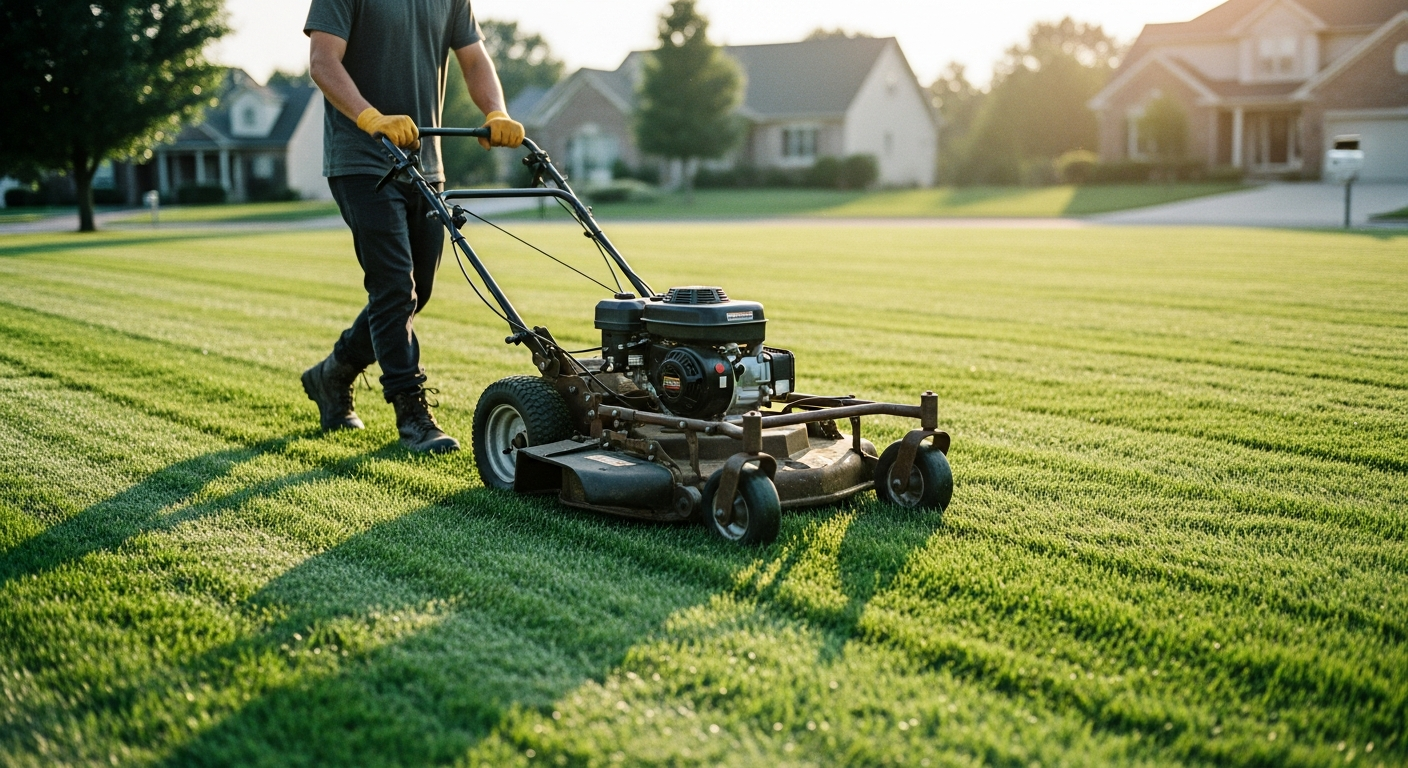
- A real striping kit or roller. A 30-pound roller dragged behind the deck does 90% of the work. The rest is you.
- A new pattern every visit. Same direction every week and the grass starts to lay permanently. We rotate diagonal, perpendicular diagonal, then straight north-south.
The pattern we run for clients
For a standard suburban front yard:
- Visit 1: Diagonal, lower-left to upper-right
- Visit 2: Diagonal, lower-right to upper-left
- Visit 3: Straight, parallel to the street
- Visit 4: Straight, perpendicular to the street
- Repeat
Rotating prevents soil compaction in the wheel tracks and keeps the grass crowns growing upright instead of leaning.
What kills your stripes?
- Mowing while the grass is wet — the blades clump and refuse to bend cleanly
- Dull blades tearing instead of cutting
- A dog that runs the same lap every afternoon (sorry)
- Mowing too short, which is also the fastest way to invite crabgrass
Can I get stripes with a push mower?
Yes, but the stripes will be subtle. A 21-inch walk-behind without a roller produces a faint pattern at best. If stripes matter to you, the cheapest upgrade is a universal striping kit — about $150 and it bolts to most decks.
Or skip the equipment investment, get on our weekly schedule, and we will keep your yard looking like a ballpark from April through October.
Frequently Asked
Questions homeowners actually ask us
- How are mowing stripes actually made?
- Stripes are an optical effect, not a cut effect. The mower bends grass blades in the direction of travel, and a roller behind the deck presses them flat. Light reflects off the bent blades very differently than off blades pointing toward you. Reverse the direction on the next pass and you get the alternating light/dark stripe.
- Do I need a striping kit to get stripes?
- For visible stripes, yes. A standard 21-inch walk-behind without a roller produces a faint pattern at best. The cheapest upgrade is a universal striping kit — about $150 — that bolts to most decks and adds 25–35 lb of consistent press.
- What blade height gives the cleanest stripes?
- Three to three and a half inches for cool-season grasses. Below 2.5 inches the blade is too short to bend dramatically and the contrast disappears. Mowing taller also reduces water loss and crowds out crabgrass, so it's a double win.
- How often should I change the mowing pattern?
- Every visit. We rotate four patterns: diagonal lower-left to upper-right, diagonal lower-right to upper-left, parallel to the street, and perpendicular. Same direction every week and the grass starts to lay permanently, which kills both the stripes and the crowns.
- Why don't my stripes last more than a day or two?
- Almost always one of three reasons: the deck is set too low, the blade is dull, or there is no roller behind the deck. Wet mowing also kills stripes immediately because the bent blades clump instead of springing back into the alternating pattern.
- Will striping the lawn damage the grass?
- No, as long as you rotate the direction. The roller weight is well below what would compact healthy turf when the soil is dry. The damage scenario is striping the same direction every visit on wet ground.
- Do stripes work on all grass types?
- They look best on cool-season grasses — Kentucky bluegrass, tall fescue, perennial ryegrass — because the leaf blades are flexible and reflective. Warm-season grasses like Bermuda and zoysia can be striped but the contrast is much subtler because the blades are stiffer.
Sources & references
- Turfgrass science research — University of Tennessee Institute of Agriculture
- Mowing your lawn — Penn State Extension
- Mowing your lawn — best practices — University of Maryland Extension
Get Your Weekend Back.
Stop staring at the overgrown lawn and the cluttered garage. One call, and it's handled.