The Riverside, CA Lawn Care Calendar: What to Do Every Month
A month-by-month lawn care guide written for Riverside's Inland Valley climate — Bermuda grass, triple-digit summers, water district restrictions, and winter overseeding included.
The short answer
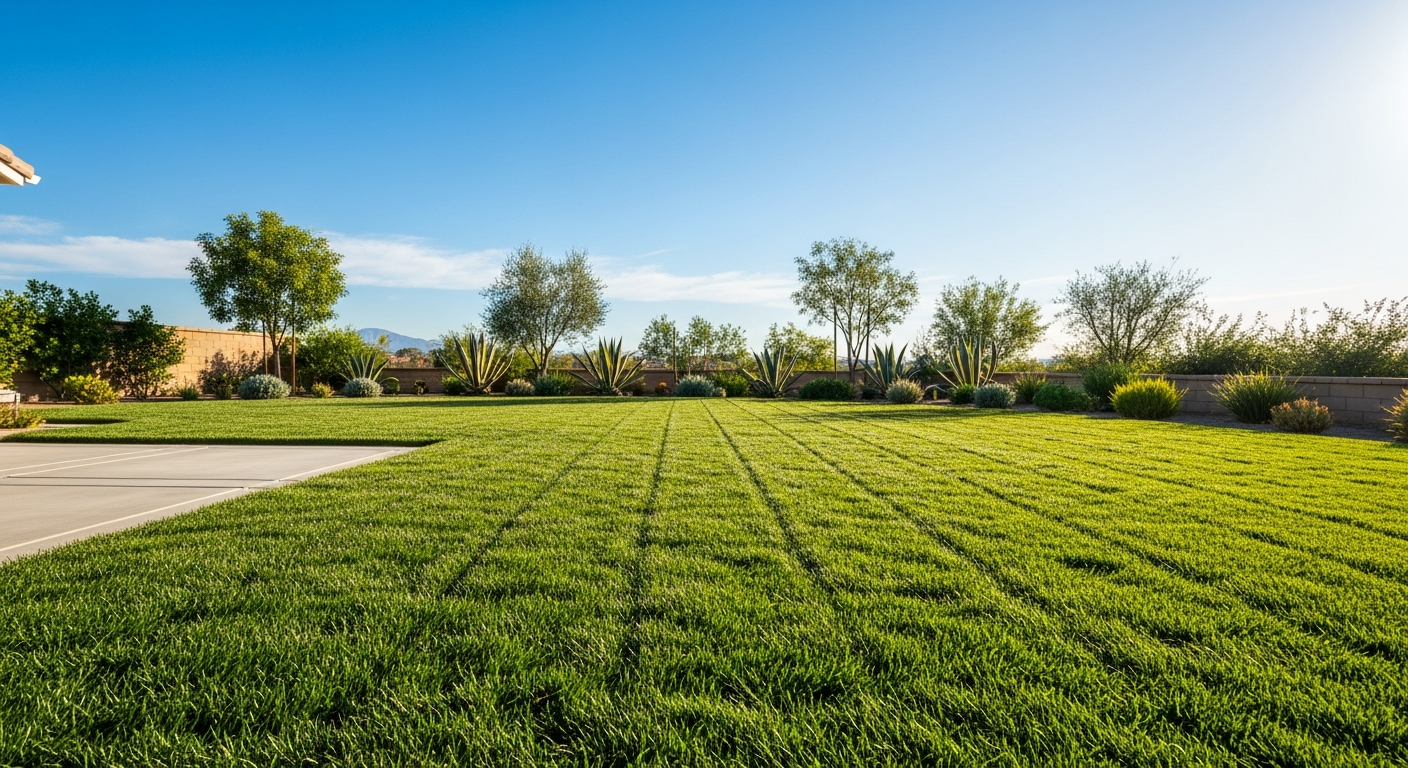
Riverside lawns run on a warm-season schedule. Bermuda grass dominates — dormant and brown December through February, actively growing March through November. Key moves: aerate and fertilize in April, irrigate deeply twice a week in July and August under water district guidelines, overseed with annual ryegrass in October for winter green, and stop fertilizing after mid-October.
Key stats
- Riverside averages 277 sunny days per year and summer high temperatures regularly reach 95–105°F, making cool-season grasses impractical without unsustainable water use.Source: National Weather Service — Los Angeles/Oxnard
- Western Municipal Water District (WMWD) mandates outdoor watering on assigned days only and prohibits irrigation within 48 hours of measurable rain, directly shaping any Riverside lawn care schedule.Source: Western Municipal Water District
- UC Cooperative Extension recommends Bermuda grass for Inland Valley lawns because it tolerates extreme heat, recovers quickly from traffic, and requires 20–30% less water than tall fescue once established.Source: UC ANR — Lawn Management in California
Riverside is not Los Angeles, and it is not Phoenix. The Inland Valley has its own thing — summer highs that push past 100°F for weeks at a stretch, Santa Ana winds that dry everything out from October through January, and water districts that tell you exactly which days the sprinklers can run. A lawn care calendar written for the Pacific Northwest or the Midwest will steer you wrong here.
This is the calendar we actually run for our Riverside clients.
What kind of grass grows in Riverside?
Bermuda grass is the standard. It handles triple-digit heat without flinching, recovers fast from foot traffic and drought, and uses less water than cool-season alternatives once established. Zoysia and Buffalo grass work if you want something slower-growing. Tall fescue survives in shadier yards but plan on carrying it through summer with heavier irrigation — it thins badly in August. If you are starting from scratch, put in Bermuda.
Winter: December through February
Bermuda is dormant and brown. That is normal — it is not dead. Do not fertilize. Do not aerate. Mow only if needed for appearances, at a higher setting than summer.
If you overseeded in October with annual ryegrass, mow the rye on a 10–14 day cycle at about two inches. Santa Ana events can dry the soil fast even in December, so check moisture before watering and respect your assigned district days.
This season is right for repairing hardscape, flushing irrigation heads, and adjusting sprinkler coverage before growth resumes.
When should I start spring lawn work in Riverside?
Bermuda starts greening up around mid-March, though dormancy can stretch into April in cooler years.
March: Resume mowing once the grass is actively growing. Raise the deck to about one and a half inches for the first few cuts. Inspect every irrigation head — winter settling shifts heads out of alignment more than any other season.
April: Once soil temperature hits 65°F (usually mid-April in Riverside), fertilize with a balanced slow-release nitrogen product. This is also the window for core aeration — the Bermuda fills in holes within two to three weeks when growing aggressively. A light topdress of sharp sand after aeration improves drainage in the clay-heavy Inland Valley soils.
Does my lawn need a different schedule because of water restrictions?
Yes. Western Municipal Water District (WMWD) and Elsinore Valley Municipal Water District (EVMWD) — the two main agencies serving Riverside County — both enforce assigned watering days, time-of-day windows, and a hard prohibition on watering within 48 hours of measurable rain. Build your irrigation schedule around those rules first, then adjust run times to hit roughly one inch per week during the growing season. A smart controller with a rain sensor makes compliance automatic.
Late Spring through Summer: May through September
Growth is fast in May and June. You will be mowing every week, sometimes every five days. Drop the deck to three-quarters of an inch for Bermuda — low and tight is how it performs best. Keep blades sharp; dull blades shred tips and turn the lawn a stressed tan.
Fertilize again in late May or early June. Watch for grubs in late spring — irregular dead patches that lift like a rug are a grub problem, not a watering problem.
July and August are the hardest months. Water deeply and infrequently: one inch per week in two sessions, not daily shallow sprinkles. Hold fertilizer to once every six to eight weeks maximum.
September temperatures start dropping in the evenings and the lawn responds — you will see stronger color and faster recovery from summer stress.
How do I handle the fall transition and overseeding in Riverside?
October: Cut fertilizer completely by mid-October. This is also overseeding season if you want green through winter. Rake or verticut the Bermuda lightly, broadcast annual ryegrass at roughly ten pounds per thousand square feet, topdress with a thin layer of compost, and water lightly every day for two weeks until germination. The rye will carry color through to April when the Bermuda pushes it out naturally.
Santa Ana season is here. Check soil moisture during wind events — a three-day Santa Ana can drop soil moisture fast enough to stress even dormant grass.
November: Mow the rye at two inches. Let the Bermuda fully go dormant. Hard frosts in Riverside proper are rare, but check irrigation systems if a cold snap is forecast.
If you would rather hand the whole calendar off to a crew that knows Inland Valley conditions, call us at (840) 266-2920. We handle everything from the spring aeration to the fall overseed.
Frequently Asked
Questions homeowners actually ask us
- What type of grass should I plant in Riverside, CA?
- Bermuda grass is the standard choice for Riverside and the broader Inland Empire. It handles triple-digit summer heat, bounces back from foot traffic, and uses less water than cool-season alternatives. Zoysia and Buffalo grass are good drought-tolerant alternatives. Cool-season varieties like tall fescue survive in Riverside but need heavy watering through summer and often thin out badly by August.
- When should I fertilize my Bermuda lawn in Riverside?
- Start fertilizing in late March or early April once the grass is actively greening up — soil temps should be at or above 65°F. Apply a balanced slow-release nitrogen fertilizer every 6–8 weeks through September. Stop completely by mid-October so the grass can harden off before dormancy. Feeding a warm-season lawn in November or December is one of the most common ways homeowners trigger disease problems.
- How often should I water my lawn in Riverside in summer?
- During peak summer, most Bermuda lawns need about one inch of water per week, split across two or three deep sessions — not daily shallow sprinkles. Check your assigned watering days under WMWD, Elsinore Valley MWD, or your local water district before setting a schedule. Deep, infrequent watering trains roots downward and makes the lawn more drought-resilient.
- Do Riverside homeowners really overseed in the fall?
- Yes, and most generic guides skip this entirely. Bermuda grass goes fully dormant and brown in Riverside from roughly December through February. Homeowners who want green through winter overseed with annual ryegrass in mid-October to early November. The ryegrass germinates in cooler temps, stays green all winter, then dies off naturally when heat returns in April and the Bermuda reclaims the lawn.
- What is the best time to aerate a Bermuda lawn in Riverside?
- Late April through May is ideal — the Bermuda is actively growing and fills in aeration holes within two to three weeks. Do not aerate in late summer or fall. Core aeration once a year, combined with a light topdress of sharp sand, is enough for most Riverside residential lawns.
- How do I handle Santa Ana wind season and my lawn?
- Santa Ana winds (October through January) pull moisture from the soil fast. Check soil moisture before and during wind events — you may need a supplemental watering even in winter. Newly overseeded ryegrass is especially vulnerable; its shallow roots will brown out quickly without consistent moisture during the first month after germination.
- Which water districts serve Riverside and what rules apply?
- Western Municipal Water District (WMWD) and Elsinore Valley Municipal Water District (EVMWD) serve significant portions of Riverside County. Both enforce assigned watering days, time-of-day windows (typically before 9 a.m. or after 6 p.m.), and a prohibition on watering within 48 hours of measurable rain. Violations can result in fines. Check wmwd.com or evmwd.com for your current schedule.
- How much does professional lawn care cost in Riverside?
- A monthly maintenance visit for a typical Riverside quarter-acre lawn — mow, edge, blow — runs $60 to $120 depending on lot size and condition. Seasonal services like aeration, fertilization, or overseeding add $150 to $350 per service. We give straight quotes before we start — call us at (840) 266-2920 for a same-week estimate.
Sources & references
- Climate data for Riverside/Los Angeles area — National Weather Service — Los Angeles/Oxnard
- Landscape Watering — Outdoor Watering Rules — Western Municipal Water District
- Lawn Management in California (Publication 8044) — UC Agriculture and Natural Resources
- Turfgrass selection for California — UC Cooperative Extension
- Warm-season lawn grass care calendar — UC IPM — University of California Integrated Pest Management
- Water use efficiency and outdoor irrigation — Elsinore Valley Municipal Water District

Get Your Weekend Back.
Stop staring at the overgrown lawn and the cluttered garage. One call, and it's handled.